articleAug 14, 2020
Using angr for Binary Analysis, Part 3
Walkthrough of the fauxware sample with angr: find the accept path, avoid the reject branch, and recover inputs from forked simulation states.
Solving fauxware with angr
Challenge binary: dnsdudrla97/angr-doc
Data section
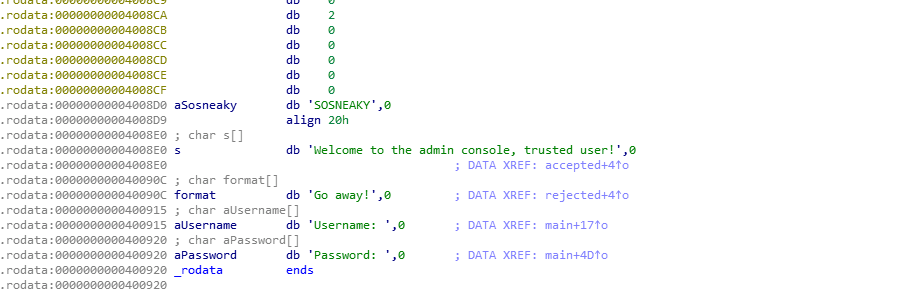
authenticate function
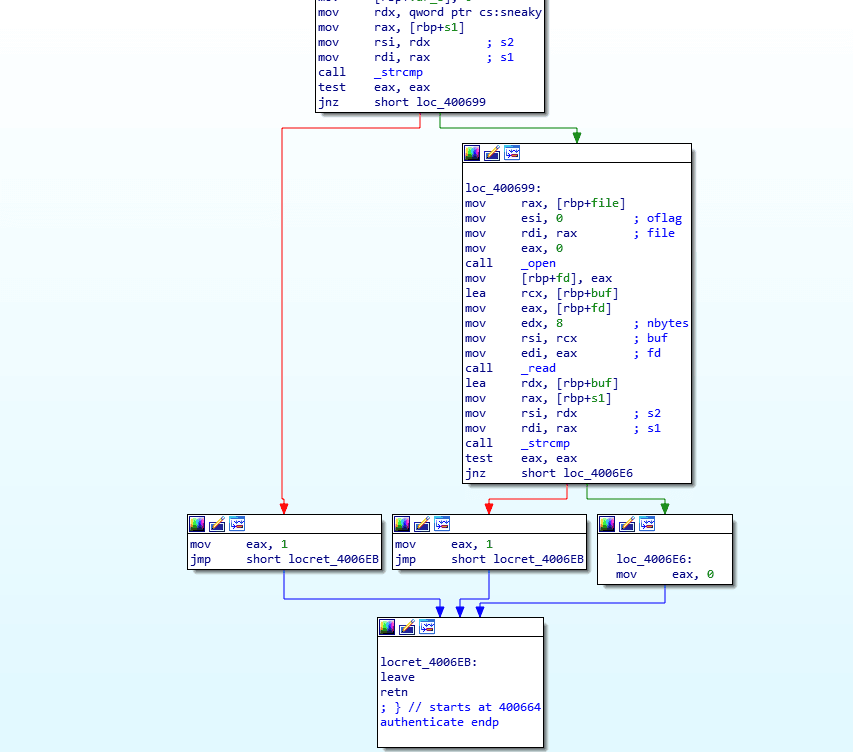
authenticatecompares the username against the string behind the globalsneakywithstrcmp. On a match it returns 1. Otherwise it opens a file named after the username and compares that file's contents to the password, returning 1 on match and 0 otherwise.- The address we need to avoid is
0x4006E6.

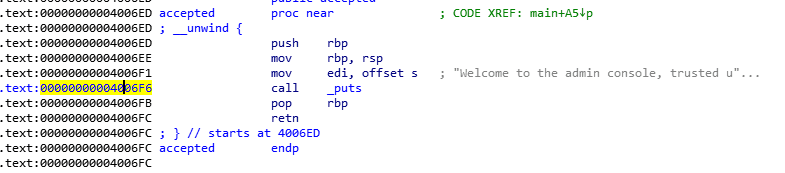
Target path
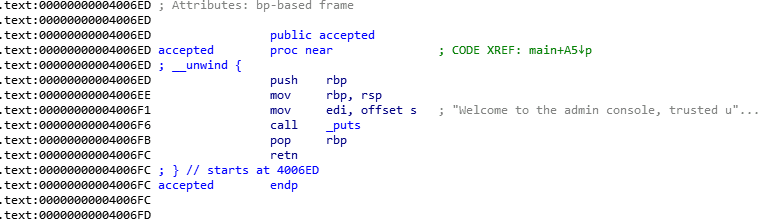
- When
authenticatereturns 1, the binary callsaccepted.
angr solve 1
def solve2():
    p = angr.Project('./fauxware', auto_load_libs=False)
    state=p.factory.entry_state()
    sm=p.factory.simgr(state)
    sm.explore(find=0x4006F6, avoid=(0x4007CE, 0x4006E6))

    print(sm.found[0].posix.dumps(0))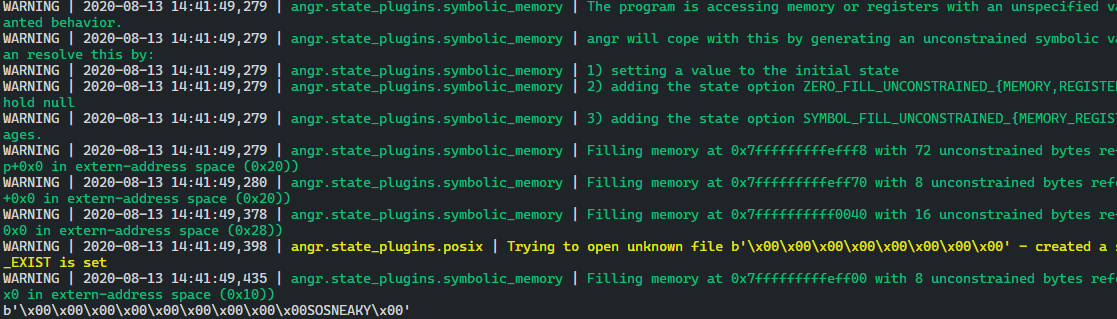
angr solve 2
def solve1():
    p = angr.Project('./fauxware', auto_load_libs=False)
    state = p.factory.entry_state()
    sm = p.factory.simgr(state)
    sm.run(until = lambda sm_: len(sm_.active) > 1)
    input_0 = sm.active[0].posix.dumps(0)
    input_1 = sm.active[1].posix.dumps(0)
    r = None
    print(input_0)
    print(input_1)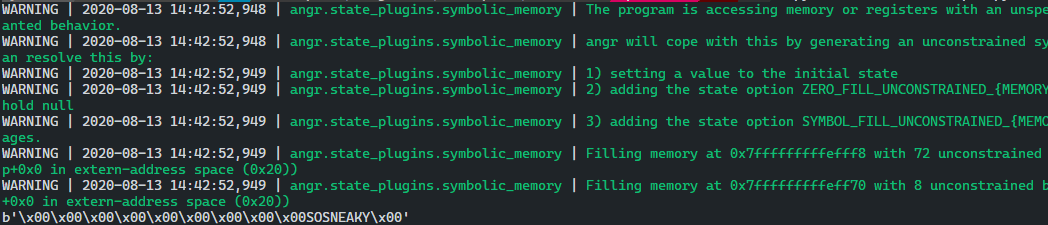
import angr
import sys

def bse():
    # Load the binary into an Angr project first.
    p = angr.Project('./fauxware', auto_load_libs=False)
    # entry_state builds a generic SimState at the program entry point.
    state = p.factory.entry_state()

    # SimulationManager is a collection of tagged states with helpers for
    # stepping and exploring them.
    sm = p.factory.simgr(state)

    # Run until a satisfying branch produces more than one active state.
    sm.run(until = lambda sm_: len(sm_.active) > 1)

    # Recover stdin for each branch.
    input_0 = sm.active[0].posix.dumps(0)
    input_1 = sm.active[1].posix.dumps(0)

    r = None

    print(input_0)
    print(input_1)

if __name__ == "__main__":
    bse()